Have you ever noticed what happens to your breath when you’re startled or stressed? It usually vanishes. We hold our breath when concentrating, or we take short, shallow sips of air when we’re anxious. Conversely, think of the universal sign of relief: a long, deep sigh.
Breathing is the only function in our body that operates on autopilot but can also be consciously controlled. This unique dual nature is not an accident. It’s an invitation. It’s your body’s built-in remote control for managing your mind, your mood, and your entire nervous system. Learning to use it is a superpower.
The Accelerator and the Brake Pedal
Your body has two opposing operating systems that make up your autonomic nervous system. The sympathetic nervous system is your “accelerator pedal”, it triggers the “fight or flight” response, flooding you with adrenaline for action. The parasympathetic nervous system is your “brake pedal”, it governs your rest, recovery, and digestion.
Most of us spend our days with our foot stuck on the accelerator. Slow, deep breathing is the most reliable way to consciously apply the brakes.
The magic happens via the vagus nerve, the superhighway of your parasympathetic system. This nerve wanders from your brainstem down through your chest, interwoven with your diaphragm and heart. When you take a long, slow exhale, you tone and stimulate this nerve, sending a powerful signal directly to your brain to stand down from high alert.
The Magic Rhythm
While any conscious, slow breathing is good, research has discovered a ‘resonant frequency’ that brings the body into an incredibly efficient and balanced state. Across multiple studies, this magic rhythm is found to be around 5.5 to 6 breaths per minute.
When you breathe at this pace (roughly a 5 second inhale and a 5 second exhale), something remarkable happens called cardiorespiratory coherence. Your heart rhythm, blood pressure oscillations, and brainwaves all lock into sync. This state is the physiological hallmark of being perfectly in flow, calm, focused, and resilient.
The Carbon Dioxide Paradox
We’re often told that deep breathing is about getting more oxygen. That’s only half the story, and not even the most important half. The real secret lies in carbon dioxide (CO₂).
We think of CO₂ as just a waste product, but it’s a vital signalling molecule. When we get stressed and overbreathe (short, shallow breaths), we blow off too much CO₂. This leads to a paradox: your blood may be saturated with oxygen, but it can’t deliver it effectively to your tissues.
This is due to a mechanism called the Bohr effect. Think of CO₂ as the key that unlocks oxygen from your red blood cells. Without enough CO₂ in your blood, the oxygen stays locked up, and your brain and muscles become starved of it, which can trigger feelings of anxiety and panic. Slowing your breath allows CO₂ to return to its optimal level, which widens blood vessels and tells your body to efficiently deliver oxygen everywhere it’s needed.
Your Brain’s Volume Knob
Have you ever felt like your mind is too “loud”? Full of racing, anxious thoughts you can’t turn down? Your breath is the volume knob.
Deep inside your brainstem is a tiny cluster of neurons called the locus coeruleus. This area is your brain’s main source of norepinephrine (noradrenaline) and controls your level of arousal and attention. When you’re stressed, it fires erratically, creating that feeling of mental chaos.
Researchers have discovered that your breathing rhythm directly controls the rhythmic firing of this area. When you breathe slowly and consciously, you smooth out the activity in the locus coeruleus. This dials down the mental noise, interrupts the cycle of anxiety, and produces a state of clear, calm focus.
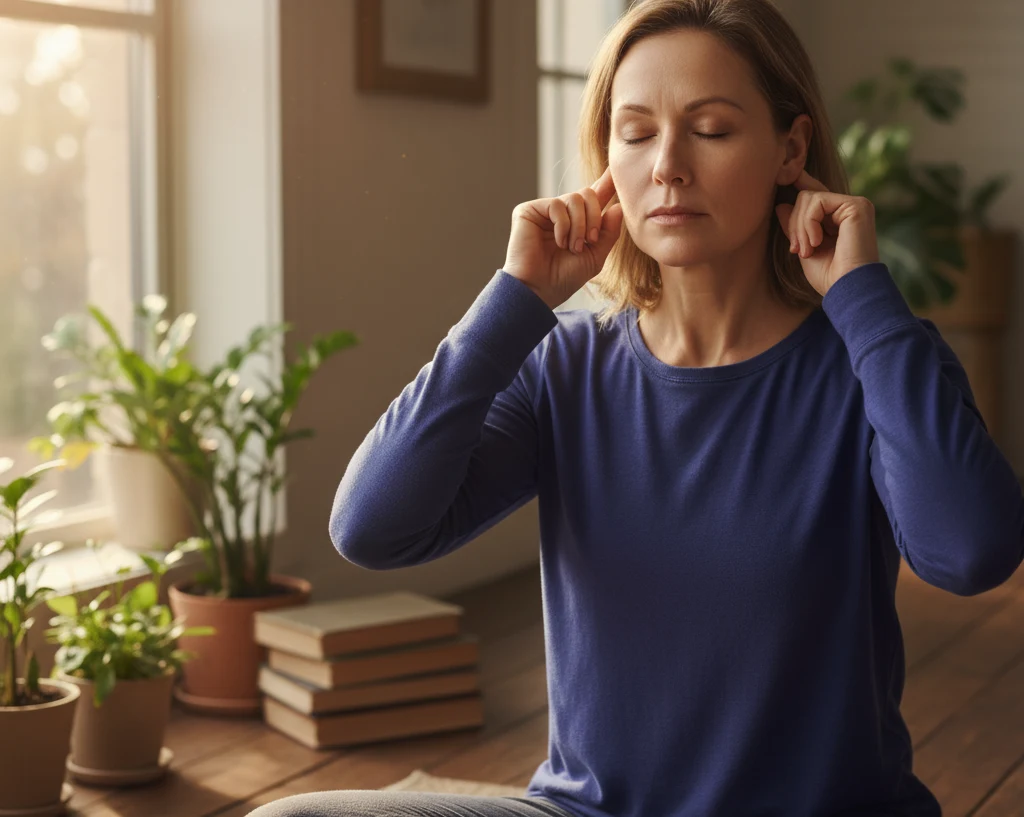
As a bonus, nasal breathing and humming practices like Bhramari (Bee Breath) have been shown to dramatically increase the production of Nitric Oxide in your airways. This amazing molecule helps to widen your blood vessels, lowering blood pressure and boosting circulation.
Breathing is the most fundamental tool you own for self-regulation. It’s free, it’s always with you, and it works every single time.
Happy breathing! Jon
Leave a Reply