
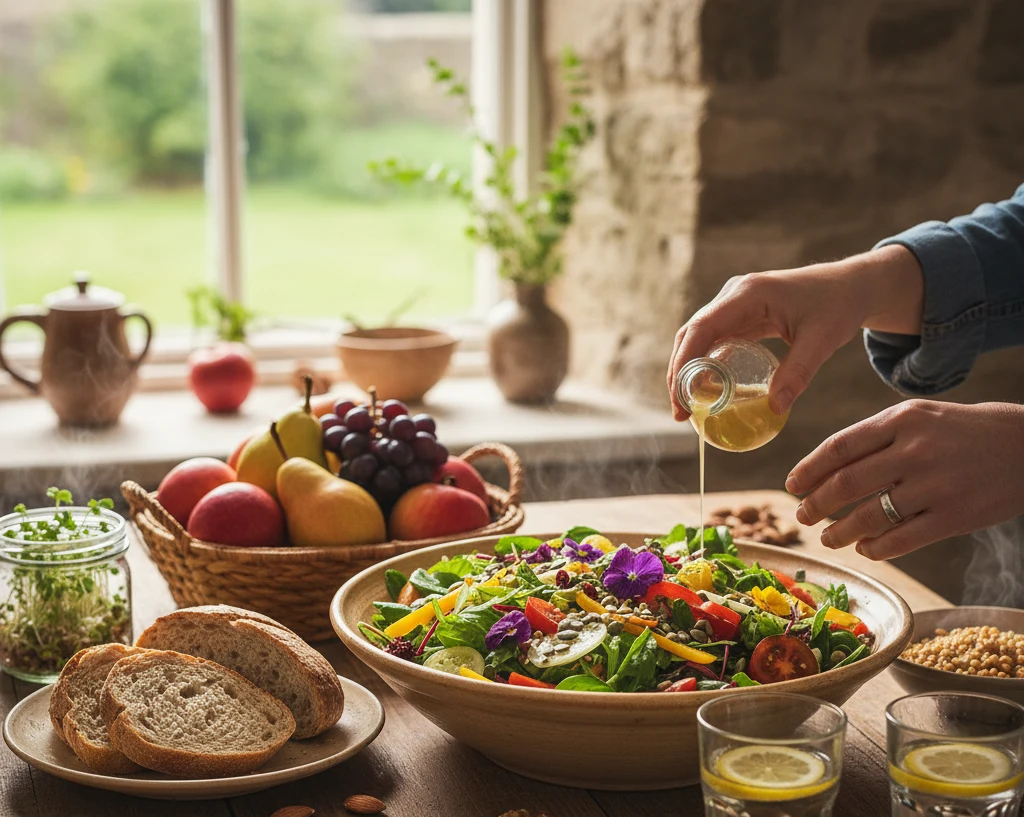
We often think of food as fuel, breaking it down into a list of chemical components: proteins, fats, carbs, vitamins, and minerals. While this framework is sound, it misses a more ancient and arguably more vital dimension, the food’s energy.
This perspective doesn’t ask what a food is made of, but rather, what is its aliveness? What is its energetic quality?
Today we’ll build a bridge between these worlds to show that food is not just fuel for the body’s machinery, but is in fact information, vitality, and coherence for our entire biological system. It’s a shift from a purely chemical view to a holistic, energetic one.
What is Prana?
In the yogic tradition, this vital energy is called Prana (प्राण).
It’s the Sanskrit word for the universal life force that animates all living things, the vibrant energy in sunlight, the charge in the air we breathe, and crucially, the vitality we absorb from the food we eat. The ancient Chandogya Upanishad states, “Verily, all things here are Prana.”

Think of it this way: Prana is the electricity, and the body is the appliance. You need not just power, but the right quality of power. A chaotic, unstable current can damage the device, whereas a smooth, steady current allows it to function optimally.
Similarly, the quality of prana we take in directly influences our physical health, our mental clarity, and the very state of our consciousness. Viewing food through the lens of prana transforms how we eat. It’s no longer about just avoiding disease, but about consciously choosing foods that cultivate radiant vitality.
The Three Gunas (Sattva, Rajas, Tamas)
Ayurveda, the ancient Indian system of medicine and sister science to yoga, offers a beautiful framework for understanding the pranic quality of food through the concept of the Gunas.
The Gunas are the three fundamental energies that make up everything in the universe. Every food you eat carries their distinct signature, profoundly affecting your body and mind.
The foundational Hindu text, the Bhagavad Gita, describes these three types of food in Chapter 17, providing an authoritative source for this energetic classification.
| Guna | Quality | Effect on Mind & Body | Bhagavad Gita Description |
|---|---|---|---|
| Sattva | Goodness, Purity, Harmony | Creates clarity, calmness, health, and lightness. It is the optimal state for mental focus and spiritual growth. | “Foods that increase life, purity, strength, health, joy, and cheerfulness, which are savory and oily, substantial and agreeable…” |
| Rajas | Passion, Activity, Stimulation | Overstimulates the body and agitates the mind, leading to restlessness, anxiety, craving, and emotional highs and lows. | “Foods that are bitter, sour, saline, excessively hot, pungent, dry, and burning… are productive of pain, grief, and disease.” |
| Tamas | Ignorance, Inertia, Darkness | Creates dullness, lethargy, brain fog, and a lack of motivation. It clouds consciousness and promotes heaviness. | “That which is stale, tasteless, putrid, and rotten, left-over and impure…” |
Understanding this energetic fingerprint of food is the first step toward consciously choosing a diet that truly nourishes you on every level, transforming your plate from a simple collection of nutrients into a powerful tool for cultivating a vibrant life.
List of Prana-Rich Foods & Their Merits
Now that we understand the energetic framework of food, we can explore the specific items that yogis and sages have revered for millennia. This is not just a list of “healthy foods”; it is a guide to cultivating vitality from the ground up, with each recommendation backed by both ancient wisdom and modern scientific insight.
Ash Gourd (Winter Melon)
Considered by many yogis, including Sadhguru, to be one of the most pranically vibrant foods on the planet. It is unique in its ability to be simultaneously energizing and calming.
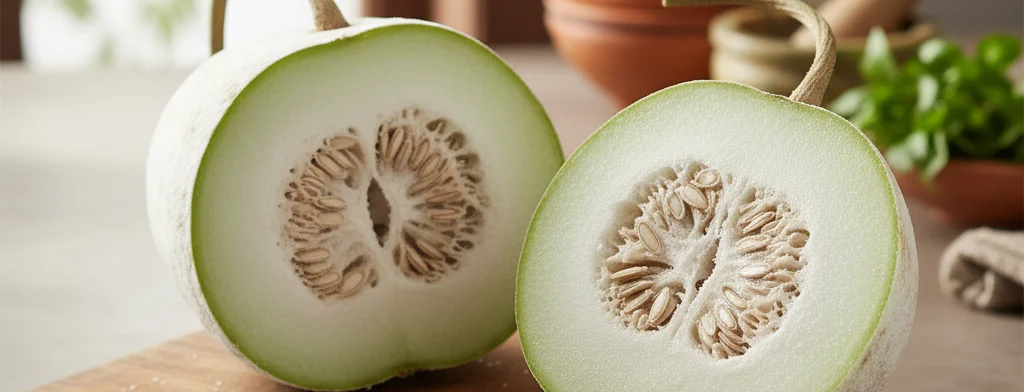
Why it’s Pranic: Its extremely high water content (about 96%) and neutral taste make it an exceptional vehicle for energy. From a biophysical perspective, this water is highly structured within the plant’s cellular matrix, making it a potent source of what Dr. Gerald Pollack calls EZ or “fourth phase” water, a highly ordered, energy-storing state. Consuming it is thought to cool the nervous system while sharpening the intellect.
Fresh Fruits
All sweet, seasonal, and freshly picked fruits are brimming with prana. They are “sun-eaters,” converting light directly into life.
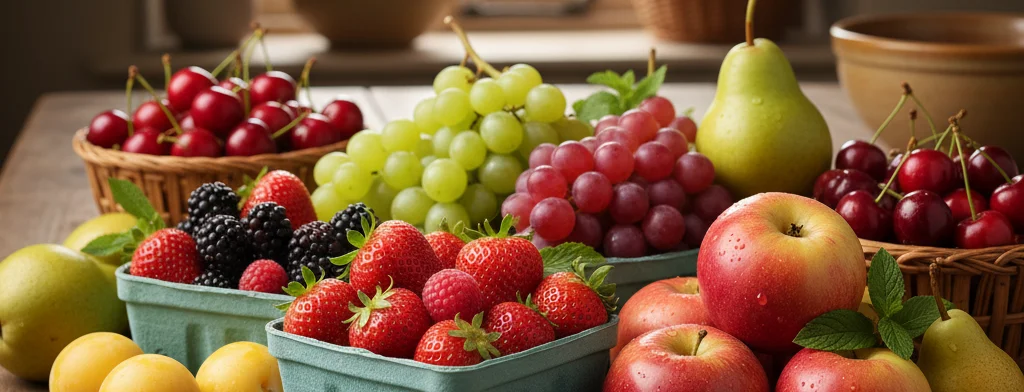
Why they’re Pranic: Fruits are rich in active enzymes, vitamins, and simple sugars that provide easily accessible energy without overburdening the digestive system. Their vitality comes from being recently alive and engaged in the process of photosynthesis, literally metabolizing light. The fresher the fruit, the more potent its pranic field.
Coconut (Flesh and Water)
In Indian culture, the coconut is a symbol of purity and is used in sacred rituals. This reverence extends to its dietary properties.

Why it’s Pranic: Fresh coconut water is a naturally sterile, isotonic beverage, rich in electrolytes that hydrate and replenish the body. The flesh contains healthy fats that nourish the brain. Its purity and life-sustaining properties make it a top-tier Sattvic food.
Honey
Honey is unique as it is a substance created by living beings from the essence of flowers. It is considered “pre-digested” by the bees, making its energy profoundly easy for the human body to assimilate.

Why it’s Pranic: It carries the energetic signature of thousands of flowers. Yogic tradition is strict, however, that honey must never be cooked or heated above 40°C (104°F). Ayurveda claims that heating honey makes it toxic (producing a substance called ama), a concept modern science might frame as the creation of harmful compounds like hydroxymethylfurfural (HMF).
Sprouted Grains, Legumes & Nuts
Sprouting is the very definition of prana unleashed. The process of germination transforms a dormant seed into a vibrant, living plant.
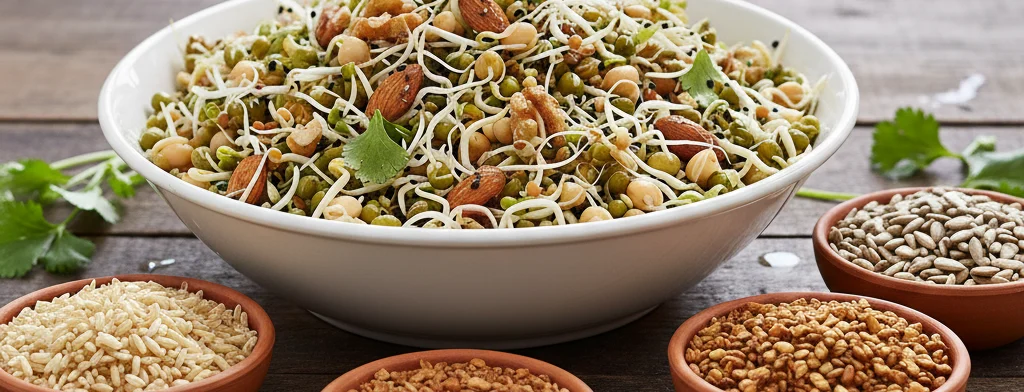
Why they’re Pranic: As confirmed by a scientific review on the effects of sprouting, germination dramatically increases a seed’s nutrient profile. Enzyme content explodes, vitamin levels (especially B vitamins and Vitamin C) can increase by over 500%, and minerals become more bioavailable. You are consuming a food at its absolute peak of life-creating energy.
Building Vitality: Positive Pranic (Sattvic) Staples
These foods should form the foundation of a diet aimed at enhancing health, clarity, and sustained energy.
Fresh Vegetables
Especially those that grow above the ground and are exposed to plenty of sunlight, such as leafy greens (spinach, chard), squash, zucchini, cucumber, and green beans.
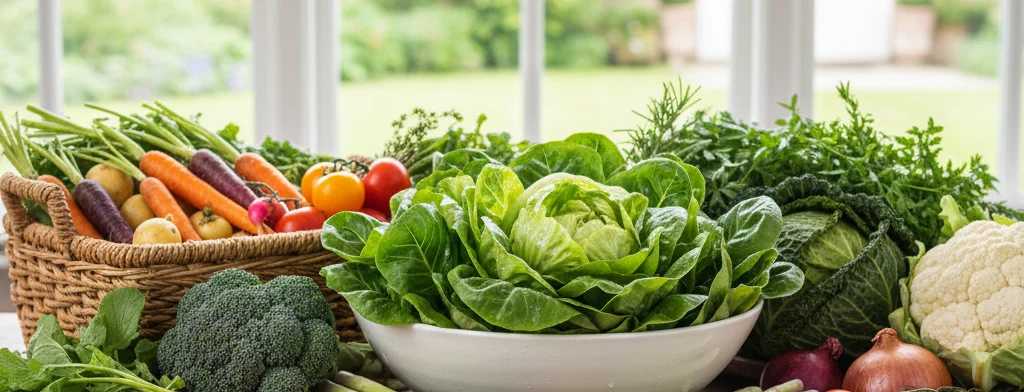
Why they’re Pranic: Like fruits, they are rich in vitamins, minerals, and the light-energy from photosynthesis. Gentle cooking methods like steaming are preferred to keep their pranic integrity intact.
Whole Grains
Freshly cooked whole grains like rice, quinoa, barley, oats, and millet provide grounding, sustained energy.
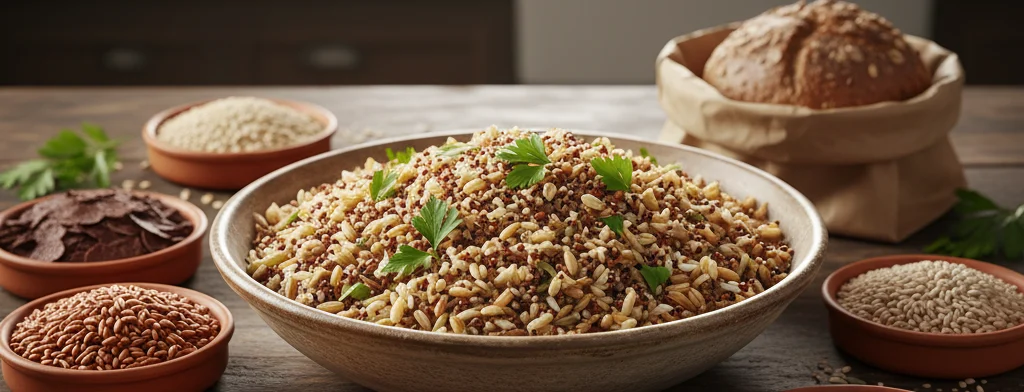
Why they’re Pranic: The key is “whole.” The complete grain (bran, germ, endosperm) offers a complex package of fibre, nutrients, and slow-release energy that supports stable blood sugar and a calm mind, aligning with the Bhagavad Gita’s description of Sattvic food as “substantial and agreeable.”
Soaked Nuts and Seeds
Almonds, walnuts, sesame seeds, and pumpkin seeds are excellent sources of prana, especially when prepared with care.
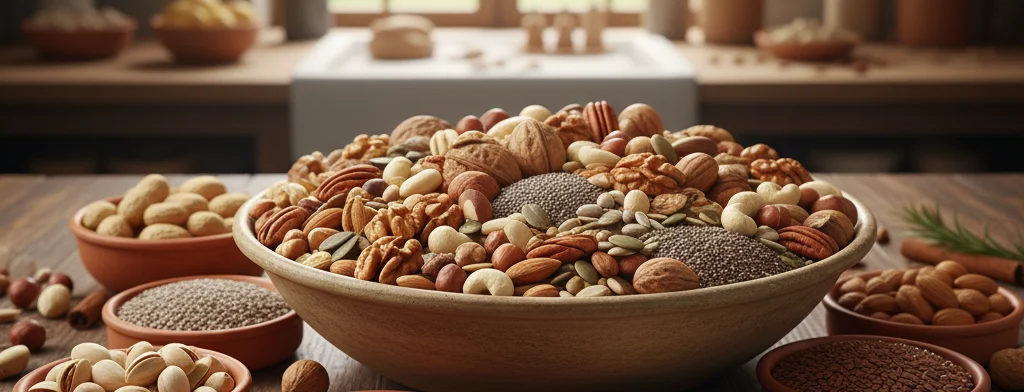
Why they’re Pranic: Soaking nuts and seeds overnight is crucial. This process neutralizes phytic acid, an “anti-nutrient” that can inhibit mineral absorption, and it awakens the seed’s dormant life force, making them easier to digest and energetically vibrant.
Healthy Fats (Ghee & Cold-Pressed Oils)
The right fats are essential for a healthy brain and nervous system. Ghee (clarified butter) is the most revered cooking fat in Ayurveda.

Why they’re Pranic: Ghee is valued for its ability to nourish Ojas, which Ayurveda considers the subtle essence of all bodily tissues and the basis of immunity and vitality. It is rich in butyric acid, which is beneficial for gut health, and has a high smoke point, making it stable for cooking.
Foods that Disturb Prana: A Guide to Rajasic & Tamasic Items
Understanding what to limit is as important as knowing what to embrace. These foods can drain or agitate our vital energy.
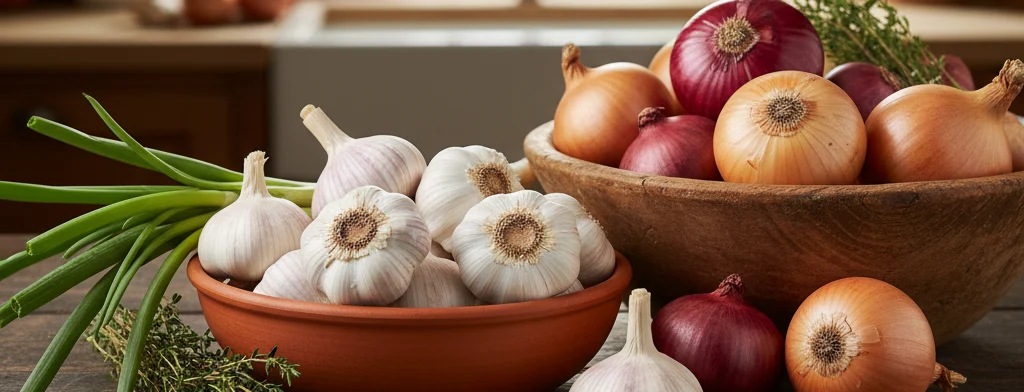
Onions & Garlic (Rajasic): While medicinally useful, they are avoided in a strict yogic diet. The tradition holds that they overstimulate the nervous system and ground consciousness too heavily in the body, making the subtle states required for deep meditation difficult to achieve.
Stimulants (Rajasic): Coffee, black tea, and energy drinks create a jarring spike in energy by activating the body’s fight-or-flight response. This is seen as borrowing energy from the future, ultimately creating a pranic deficit that leads to burnout.

Stale, Processed & Leftover Foods (Tamasic): Prana diminishes rapidly after food is harvested and cooked. Leftovers, canned goods, frozen meals, and highly processed items are considered energetically dead. Scientifically, this aligns with oxidation, nutrient degradation, and the formation of inflammatory compounds that create a burden on the body.

Bridging Prana and Science
While “prana” isn’t a substance you can isolate in a test tube, modern science offers fascinating parallels that validate this ancient wisdom. The yogic concept of an energetic life force is no longer confined to spiritual texts; it is now being explored on the frontiers of biophysics and quantum biology. Let’s look at the compelling evidence.
Biophotons: Are We Eating Light? 💡
One of the most profound discoveries in biophysics is that all living cells emit a subtle, non-thermal glow of light particles called biophotons. This field of research was pioneered by German biophysicist Dr. Fritz-Albert Popp, who demonstrated that this light is not random metabolic exhaust but is, in fact, highly coherent, like a weak biological laser.
The theory posits that this coherent light field is the primary communication network of the body, orchestrating the trillions of chemical reactions happening every second. This leads to a stunning hypothesis for prana:
The “prana” of a food could be a direct, physical correlate of the intensity and coherence of its biophoton field.
Research from Popp’s institute found that fresh, organic, sun-ripened produce has a vibrant and coherent light emission, while stale or processed food has a weak and chaotic one. When you eat a freshly picked apple, you are not just consuming molecules; you may be literally consuming organized light energy, a perfect scientific mirror to the concept of prana.
Structured Water: The Battery in Your Food 💧
If biophotons are the message, water is the medium. The water inside a living cell is not the same as the water in a glass. This has been demonstrated conclusively by Dr. Gerald Pollack at the University of Washington.
His research shows that water next to hydrophilic (water-loving) surfaces, like the membranes inside cells, organizes itself into a gel-like crystalline lattice. This is known as Exclusion Zone (EZ) water, or “the fourth phase of water.” This structured water holds a negative electrical charge, creating a small battery that helps power cellular processes.
The “vitality” of a high-prana food like a cucumber or ash gourd is directly related to its high content of this energy-storing, structured water. The application of harsh heat (like in a microwave) or processing can destroy this delicate crystalline structure, causing the water to lose its stored energy and coherence. The prana, in a very real physical sense, is gone.
The Quantum Connection
For the truly curious, we can ask: what is the fundamental physics behind this biological order?
The answer may lie in quantum mechanics. While highly theoretical, the work of Italian physicists like Emilio Del Giudice explored how Quantum Electrodynamics (QED) could apply to water.
They found that water molecules can form large “Coherence Domains” that oscillate together, behaving as a single quantum entity capable of storing and transmitting electromagnetic signals. This provides a first-principles explanation for how water can hold the structured, energetic information that is Prana.
As of 2025 this is a new frontier in physics, with new papers exploring coherent water coming out every few months. From this view, the universe is fundamentally vibration and information. A prana-rich diet is a conscious choice to consume foods whose quantum coherence aligns with and supports our own, providing our system with order, not just raw materials.
The Gut-Brain Axis: Prana and Your Inner Ecology
Finally, we have a powerful validation of the Sattvic diet from mainstream neuroscience and microbiology: the gut-brain axis. Your gut is home to trillions of bacteria (the microbiome) that are in constant communication with your brain.

As confirmed by a wealth of research summarized in sources like Harvard Health, this connection is profound. Your gut bacteria produce hundreds of neurochemicals, including about 95% of your body’s serotonin, a key regulator of mood.
A Sattvic diet, rich in fibre, fresh vegetables, and whole foods, is precisely the diet that fosters a healthy, diverse microbiome. A Tamasic diet, high in processed foods, sugar, and unhealthy fats, promotes inflammatory bacteria. Therefore, the yogic assertion that a Sattvic diet creates clarity and a Tamasic diet creates “dullness” is directly supported by our modern understanding of how our inner ecology shapes our mental and emotional states.
Living a Prana-Rich Lifestyle
Understanding the principles of pranic eating is the first step. The next is to bring this wisdom into your kitchen and onto your plate. Shifting to a high-prana lifestyle doesn’t require complex rules; it is an intuitive return to eating real, vibrant foods with awareness and care. Here are some practical ways to begin.
The Art of Preparation: How You Cook Matters
The way food is prepared can either preserve or destroy its vital energy. Harsh, high-heat cooking methods are believed to damage the prana, while gentle methods keep it intact. Think of it as preserving the food’s delicate biophotonic and molecular structure.
A Hierarchy of Cooking Methods (Most to Least Pranic):
- Raw/Sprouted: Eating foods in their natural, uncooked state delivers the maximum amount of prana, enzymes, and life force. This is ideal for most fruits, many vegetables, and sprouted grains.
- Steaming: A gentle method that cooks food without aggressive heat or submersion in water, preserving nutrients and pranic quality.
- Sautéing/Stir-frying: A quick, light method using a healthy fat like ghee or coconut oil. The key is to cook briefly at a moderate temperature.
- Baking/Roasting: A slower, drier heat method. While less pranic than steaming, it is still a good option for root vegetables and grains.
- Boiling: Can cause water-soluble vitamins to leach out into the water. If you do boil, try to consume the broth or water as well.
- Frying: High-heat frying can create inflammatory compounds and is considered to destroy prana.
- Microwaving: From a yogic and biophysical perspective, the intense, chaotic vibrations of a microwave are believed to completely destroy the food’s subtle energetic structure and coherence.
The Forgotten Ingredient: The Prana of the Chef
Yogic traditions have always maintained that the consciousness of the person preparing the food is infused into the meal. Cooking with a calm, positive, and loving intention is said to enhance the food’s Sattvic quality. While this may sound purely mystical, modern science offers a fascinating parallel.
The very sight, smell, and even the thought of food triggers the cephalic phase of digestion. This is a neurological process where your brain tells your stomach to start producing digestive enzymes before you even take a bite. Eating in a stressed state inhibits this process. Therefore, preparing and eating food mindfully and with gratitude has a direct, measurable effect on how well you digest and assimilate it.
A Prana-Rich Day: Sample Meal Plan & Recipes
Here is an example of what a simple, high-prana day of eating might look like. Notice the emphasis on fresh, whole ingredients and gentle preparation.
Breakfast: Sattvic Energy Smoothie
- 1 ripe banana
- 1/2 cup of berries (fresh or frozen)
- 1 tablespoon of soaked almonds or almond butter
- 1 cup of coconut water or almond milk
- A pinch of cardamom
Instructions: Blend all ingredients until smooth. Enjoy immediately.
Lunch: Quinoa & Mung Bean Nourish Bowl
- 1 cup cooked quinoa
- 1 cup cooked or sprouted mung beans
- 1/2 avocado, sliced
- A large handful of fresh spinach
- 1/2 cucumber, chopped
- Dressing: Mix 1 tbsp olive oil, 1 tbsp lemon juice, and a pinch of salt.
Instructions: Assemble all ingredients in a bowl and drizzle with dressing.
Dinner: Simple Red Lentil Dal
- 1 cup red lentils, rinsed
- 3 cups of water or vegetable broth
- 1 tsp ghee or coconut oil
- 1/2 tsp turmeric powder
- 1/2 tsp cumin seeds
- Fresh ginger, grated (to taste)
- Salt to taste
- Fresh cilantro for garnish
Instructions: In a pot, bring lentils and water/broth to a boil, then simmer for 15-20 minutes until soft. In a small pan, heat the ghee and toast the cumin seeds and ginger for a minute until fragrant. Stir the spice mixture, turmeric, and salt into the cooked lentils. Garnish with fresh cilantro and serve with rice or flatbread.
Eating for a Radiant Life
Adopting a prana-rich diet is about more than just physical health. It is an act of profound self-care that recognizes the deep and immediate connection between the energy of your food and the energy of your consciousness. It is a shift from eating unconsciously to nourishing yourself intentionally.
You don’t need to be perfect. Simply begin by incorporating more fresh, vibrant, living foods into your diet. Pay attention to how you feel, not just physically, but mentally and emotionally too. By choosing foods high in prana, you are choosing to cultivate a clearer mind, a more stable system, and a more radiant life.
Jon
Leave a Reply